How Recruiters Shortlist Resumes
In India, a recruiter handling 4-5 open positions per day reviews 20-40 resumes per position — that is 80-200 resumes screened daily before a single candidate call is made. This guide explains the process, what it costs your agency, and how AI changes the equation.
Common Shortlisting Methods
Keyword Filtering
ATS systems scan resumes for specific keywords from the job description. Resumes without matching keywords are filtered out.
ADVANTAGES
- Fast processing
- Automated
- Consistent
LIMITATIONS
- •Misses qualified candidates
- •No context understanding
- •Easy to game
Manual Review
Recruiters read each resume individually, making judgment calls based on experience and intuition.
ADVANTAGES
- Human judgment
- Context awareness
- Flexible
LIMITATIONS
- •Time-consuming
- •Inconsistent
- •Subject to bias
AI Semantic Matching
AI analyzes resumes using natural language processing, understanding skills and experience in context.
ADVANTAGES
- Understands context
- Consistent evaluation
- Fast processing
LIMITATIONS
- •Requires technology adoption
- •Newer approach
The Resume Shortlisting Process
Define Job Requirements
Start with a clear job description outlining required skills, experience, and qualifications.
Gather Applications
Collect resumes through job boards, career pages, referrals, and recruitment campaigns.
Initial Screening
Apply initial filters—either automated keyword matching or AI semantic analysis.
Detailed Review
Review promising candidates in depth, assessing fit beyond basic qualifications.
Rank and Shortlist
Prioritize candidates based on match quality and schedule interviews with top matches.
AI-Powered Shortlisting
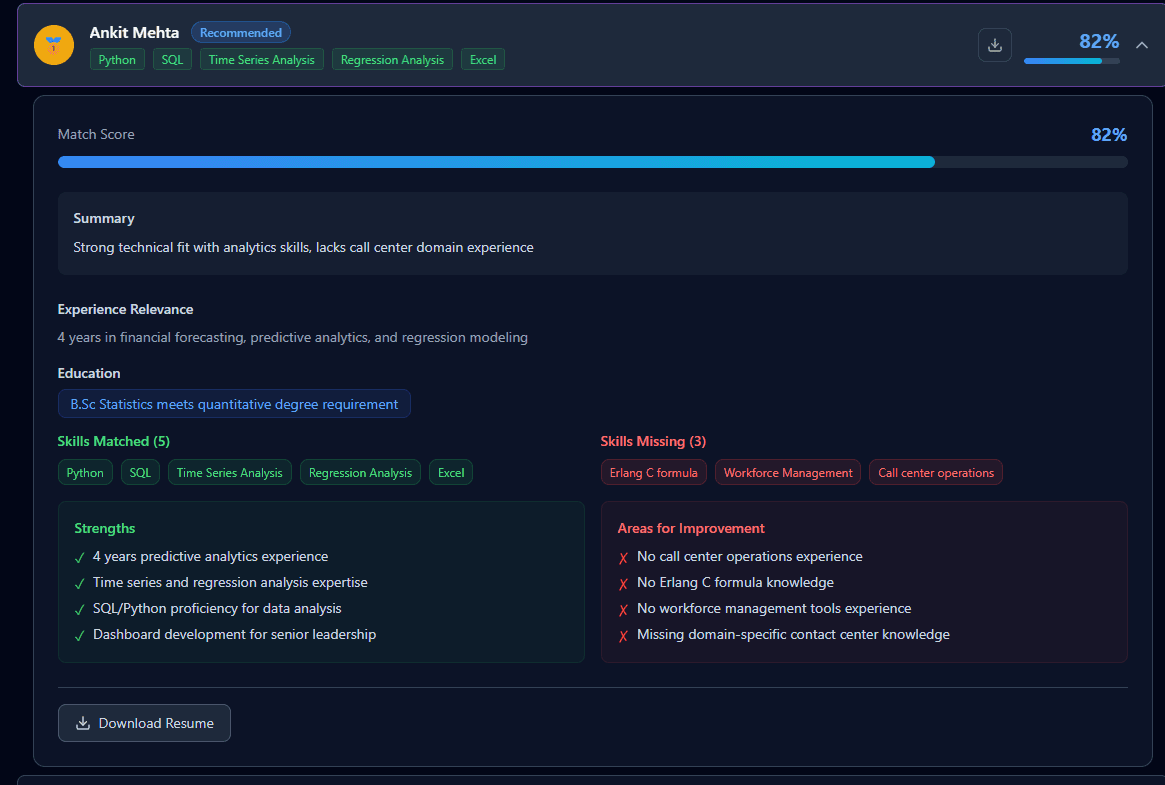
Match Scores and Insights
AI semantic matching provides detailed insights on why each candidate matches—or doesn't match—your requirements.
Why Semantic Matching Matters
Traditional keyword filtering has a fatal flaw: it misses qualified candidates who use different terminology than your job description. A candidate with "React.js experience" might be filtered out if your job description only mentions "React developer."
Semantic matching solves this by understanding that these terms refer to the same skill. It looks at the context of experience, not just the presence of keywords. This helps recruiters discover strong candidates who would otherwise be overlooked.
Key Takeaway
The best shortlisting approach combines AI efficiency with human judgment. In a typical Indian recruitment consultancy with 5-10 recruiters handling IT, BFSI, or operations mandates, AI screening reduces time-to-shortlist from 3-4 hours per position to under 30 seconds — freeing your team to focus on client calls, candidate engagement, and offer negotiation. That is where your real value to the client lies, not in opening PDFs.
The Real Cost of Manual Shortlisting in India
Salary data: PayScale India 2025. Screening hours: recruiter survey estimates.